
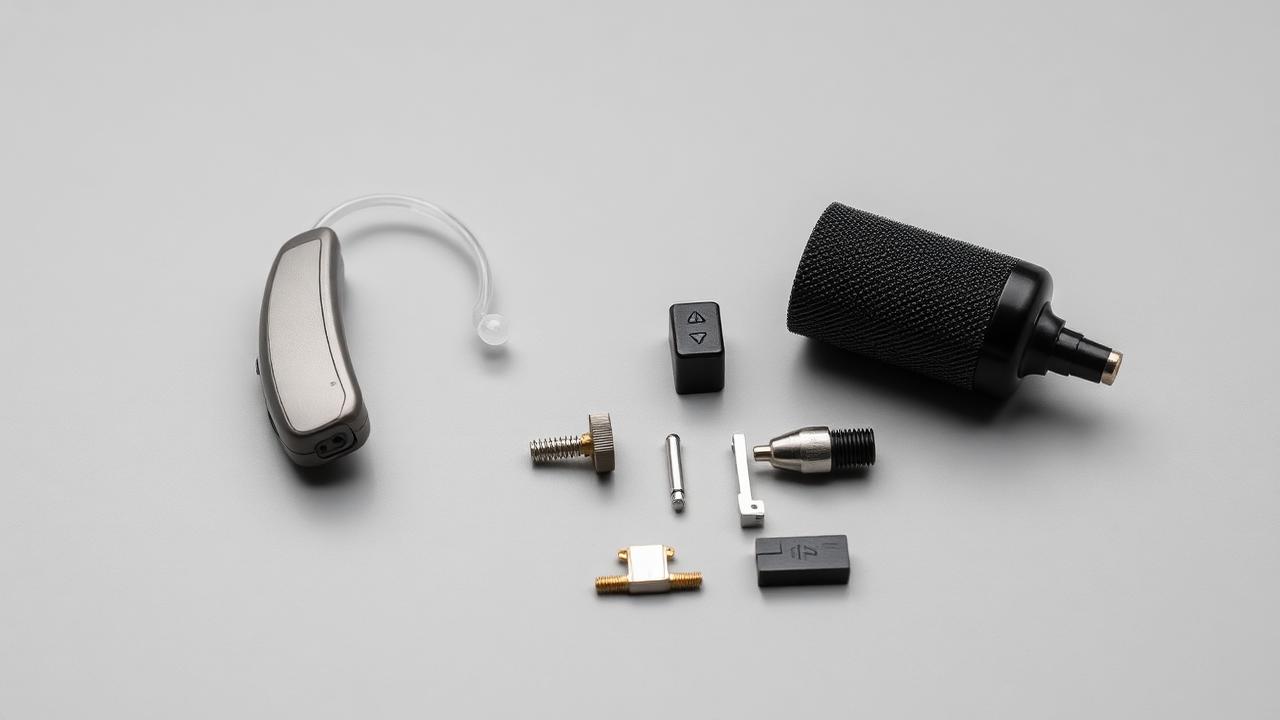
A hearing aid picks up sound through one or more microphones, converts it into a digital signal, processes that signal to match the specific frequencies you have lost, and plays the result into your ear through a tiny loudspeaker called a receiver. The important part is the middle step: a hearing aid does not simply make everything louder, it amplifies selectively according to a prescription calculated from your audiogram — which is why a device fitted by an audiologist in Aylesbury sounds nothing like an off-the-shelf amplifier.
The four stages inside every hearing aid
- Microphones capture sound. Most modern devices use two per ear, which allows them to work out which direction a sound came from.
- An analogue-to-digital converter turns that sound into numbers the chip can work with.
- The processor applies your prescription: boosting the frequencies you struggle with, leaving alone the ones you hear well, compressing loud sounds so they never become uncomfortable, and suppressing steady background noise.
- The receiver converts the processed signal back into sound and delivers it into your ear canal.
All of this happens with a delay of a few thousandths of a second, which is why lip movement and sound still line up.

Why selective amplification matters
Most age-related hearing loss is worse at high frequencies. That is what makes speech sound present but unclear: vowels carry most of the volume and sit low, while the consonants that distinguish words — s, f, th, t, k — sit high and are the first to go. A device that simply raised everything would make the vowels boom without adding any clarity. A prescribed fitting boosts the high frequencies substantially and the low ones barely at all, which is why speech becomes intelligible rather than just louder.
| Feature | What it does | When you notice it |
|---|---|---|
| Compression | Squeezes loud sounds down, lifts quiet ones | A door slams and it is not painful |
| Directional microphones | Favour sound in front of you | Conversation across a restaurant table |
| Noise reduction | Suppresses steady, non-speech sound | Car engines, fans, air conditioning |
| Feedback cancellation | Detects and cancels whistling | Hugging someone, putting on a hat |
| Frequency lowering | Shifts unhearable highs into a lower band | Severe high-frequency loss |
| Automatic programmes | Switch settings by environment | Walking from a quiet street into a pub |
Where the prescription comes from
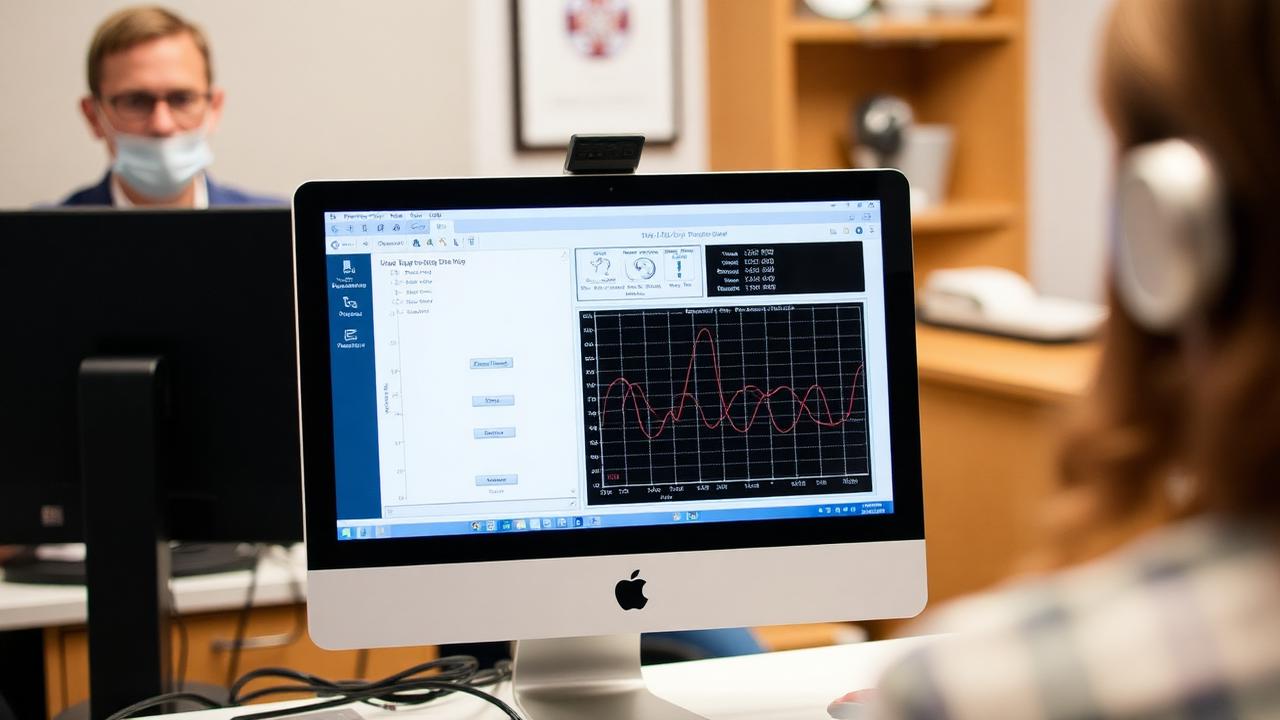
A diagnostic hearing test produces an audiogram: the quietest sound you can detect at each frequency in each ear. Fitting software converts that into target amplification levels using a validated formula. But software targets are only a starting point, because every ear canal has a different shape and resonance. Real ear measurement puts a fine probe microphone in your canal alongside the device and measures what is actually reaching your eardrum, then adjusts until measurement matches prescription. NICE guidance treats this verification as standard practice, and it is the difference between a device that is technically correct and one that is correct in your ear.
Two people with identical audiograms need different physical settings, because their ear canals are different shapes. That is what real ear measurement corrects for.
What hearing aids cannot do
- • They cannot restore normal hearing. They make the sound your remaining hearing can use as clear as possible.
- • They cannot fully separate one voice from four in a very noisy room, though modern chips are far better at this than they were five years ago.
- • They cannot cure tinnitus, though many people find tinnitus less intrusive when hearing is supported.
- • They cannot compensate for the brain's slow adaptation. Most people need six to eight weeks of daily wear before sound feels natural.
Why technology levels differ in price
Every level uses the same basic four-stage architecture. What rises with price is the number of processing channels, how quickly and precisely the device adapts between environments, and how sophisticated the speech-in-noise processing is. Someone who is mostly at home in quiet rooms genuinely does not need the top tier. Someone who works in meetings and eats out twice a week usually notices the difference immediately. Our hearing aid prices page sets out what each level includes, and you can compare hearing aid models across the four brands we fit.
Frequently asked questions
Clinical References & Sources
- NICE (2018). Hearing loss in adults: assessment and management. NG98. nice.org.uk
- RNID. How hearing aids work. rnid.org.uk
- NHS (2023). Hearing aids and implants. nhs.uk
Reviewed 27 July 2026. Next scheduled review: September 2026.