

To put in a hearing aid, hold the dome between thumb and forefinger, pull the top of your ear gently upwards and back with the other hand to straighten the canal, then slide the dome in until it sits snugly and the wire or tube follows the natural line of your ear. It should feel secure without pressure. If it needs force, the dome is the wrong size and a quick check with the audiologist who handled your hearing aid fitting will sort it in minutes.
Insertion is the part everyone finds fiddly in the first fortnight and nobody thinks about after that. The trick is almost always the angle rather than the effort — the ear canal bends, and pulling the outer ear up and back straightens it enough for the device to follow.
Before you start
- • Sit somewhere with a mirror and good light for the first few weeks.
- • Work over a soft surface, so a dropped device lands on a bed or towel rather than a tiled floor.
- • Check the devices are on and the battery is fresh or charged.
- • Identify left and right. Red marks right, blue marks left, on almost every manufacturer.
- • Make sure your hands are clean and dry.
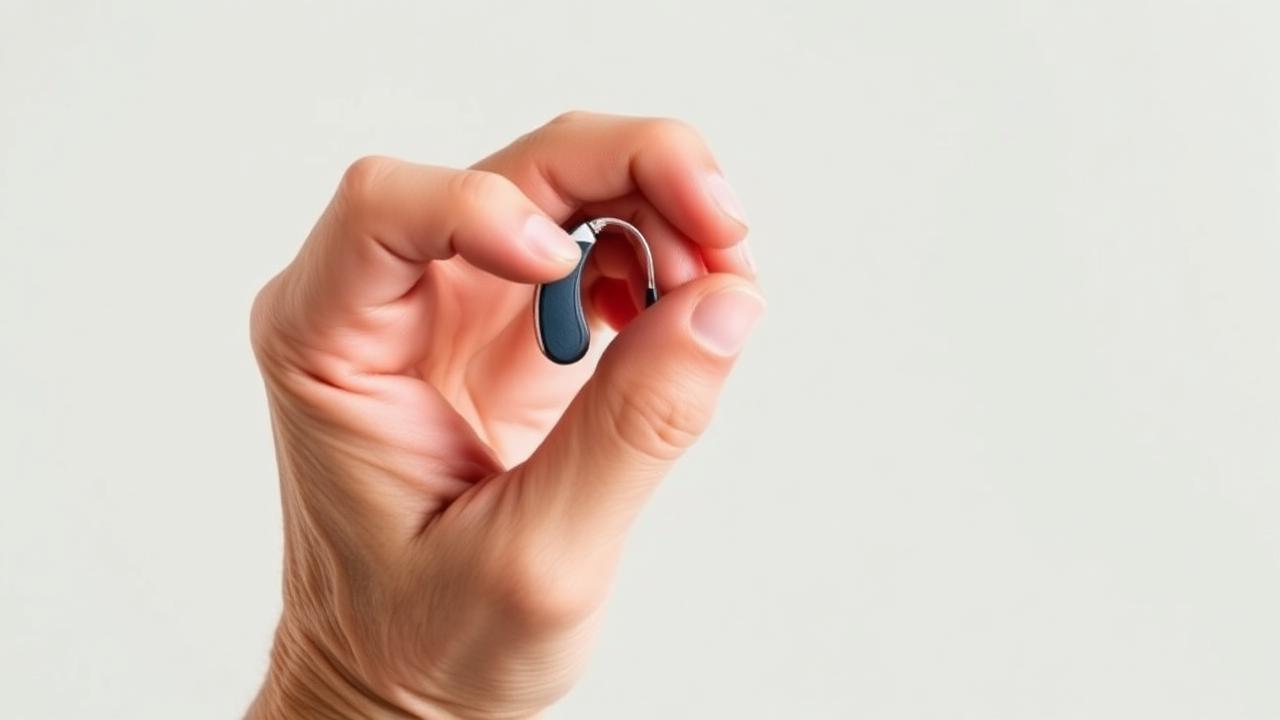
Receiver-in-canal (RIC) devices
- Hold the body of the hearing aid in one hand and let the wire hang naturally.
- Grip the dome between the thumb and forefinger of your other hand.
- With the opposite hand, pull the top of your ear gently upwards and back.
- Slide the dome into the canal, following the direction the canal naturally runs — slightly forward, not straight in.
- Push gently until it seats. You will usually feel a small give as it settles.
- Lift the body of the aid over the top of your ear so it rests flush behind it.
- Run a finger along the wire to check it sits flat against your head.
Behind-the-ear devices with a custom mould
- Hold the mould so the canal portion points towards your ear opening.
- Insert the canal portion first, then rotate the mould gently backwards into the bowl of the ear.
- Press the outer rim in with a fingertip until it sits flush — it should not stand proud.
- Lift the hearing aid over the top of the ear.
- Check by smiling widely. If the mould loosens or whistles, it is not fully seated.
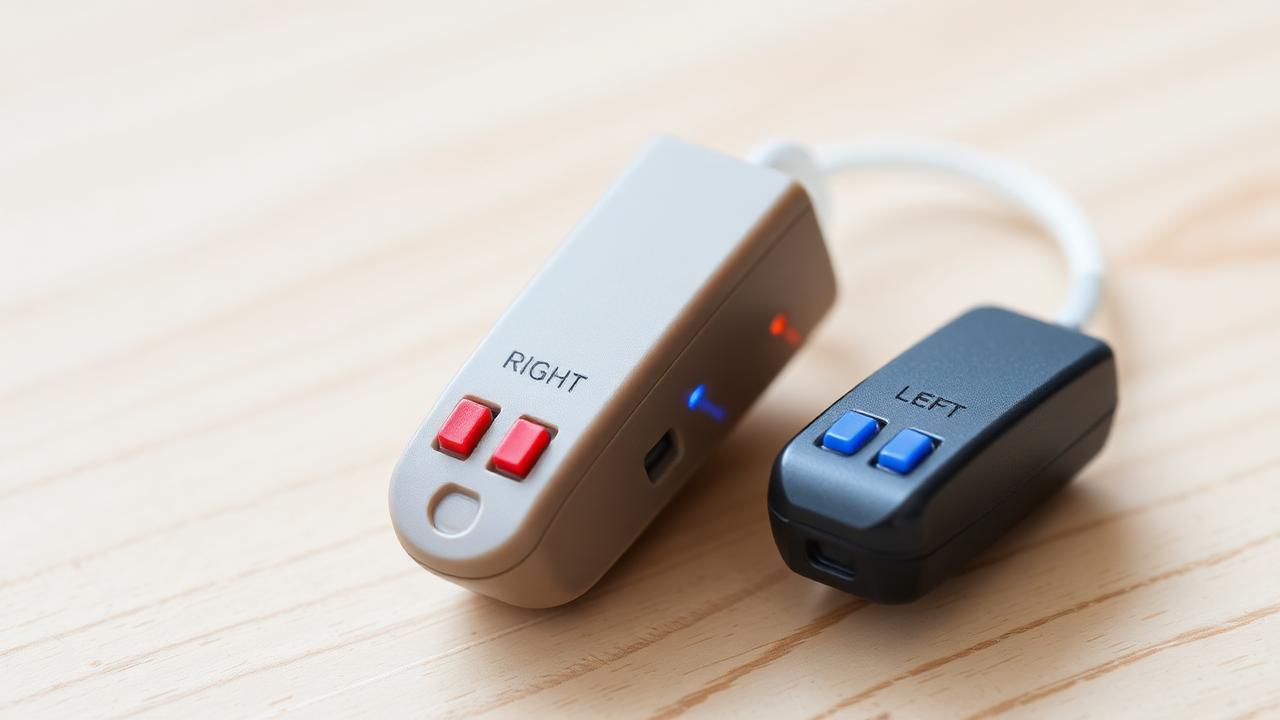
In-the-ear and in-canal devices
Hold the device by its faceplate or removal cord, pull the ear up and back, and rotate it gently into the canal until it sits flush with the bowl of your ear. These devices are moulded to a single orientation, so if it resists, back off and change the angle rather than pushing. Never insert an in-the-ear device by pressing on the battery door, which can pop it open.
A brief whistle as you insert is normal. A whistle that continues once the device is in means it is not seated — take it out and start again.
How to tell it is in correctly
| Sign | Correct | Not correct |
|---|---|---|
| Sound | Full and clear immediately | Whistling, or noticeably muffled |
| Comfort | Present but not pressing | Sharp pressure or pain |
| Movement | Stays put when you chew and talk | Works loose within minutes |
| Appearance | Wire or tube flat against the head | Wire standing away from the ear |
| Depth | Dome fully inside the canal | Dome visible at the entrance |
Taking them out
Lift the body of the device off the top of your ear first, then draw the wire or tube outwards and let the dome follow. Never pull on the wire alone — that is how domes are left behind in the canal. If a dome does come off in your ear, do not try to fish it out with anything; it is a five-minute removal at a clinic and a genuinely common event.
If insertion stays difficult
Persistent difficulty is a fitting issue, not a personal failing. Options include a larger dome for a firmer grip, a different dome style, a custom mould, a longer or shorter receiver wire, or an insertion tool for reduced dexterity. Reduced hand strength, arthritis and tremor all have practical solutions, and none of them involve putting up with a device you cannot get in.
Frequently asked questions
Clinical References & Sources
- RNID. Getting used to hearing aids. rnid.org.uk
- NHS (2023). Hearing aids and implants. nhs.uk
- NICE (2018). Hearing loss in adults: assessment and management. NG98. nice.org.uk
Reviewed 27 July 2026. Next scheduled review: September 2026.