
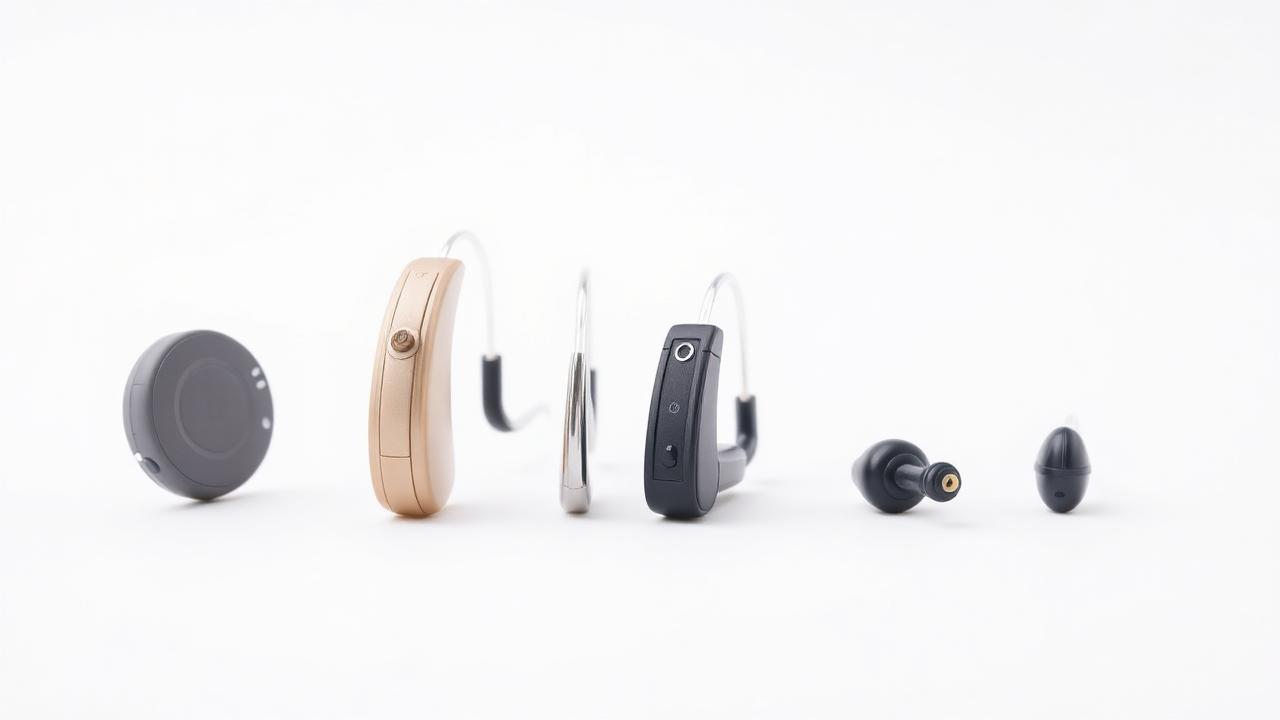
There are five main types of hearing aid: behind-the-ear (BTE), receiver-in-canal (RIC), in-the-ear (ITE), in-the-canal (ITC) and completely-in-canal (CIC). RIC devices are the most commonly fitted today because they are discreet, comfortable and suit most degrees of hearing loss. The general rule is simple: the smaller the device, the less power, battery life and connectivity it offers. Which one is right depends on your audiogram, your ear canal and your dexterity, which is what a hearing aid fitting in Aylesbury is there to establish.
The five styles at a glance
| Style | Where it sits | Suits | Trade-off |
|---|---|---|---|
| BTE | Body behind ear, tube into canal | Any loss including severe/profound | Most visible, most robust |
| RIC | Body behind ear, receiver in canal | Mild to severe | Receiver in the canal meets wax and moisture |
| ITE | Fills the bowl of the ear | Mild to severe | Visible in the ear, more wax exposure |
| ITC | Partly inside the canal | Mild to moderate | Small battery, fewer features |
| CIC | Deep in the canal, nearly invisible | Mild to moderate | Least power, shortest battery, fiddly to handle |
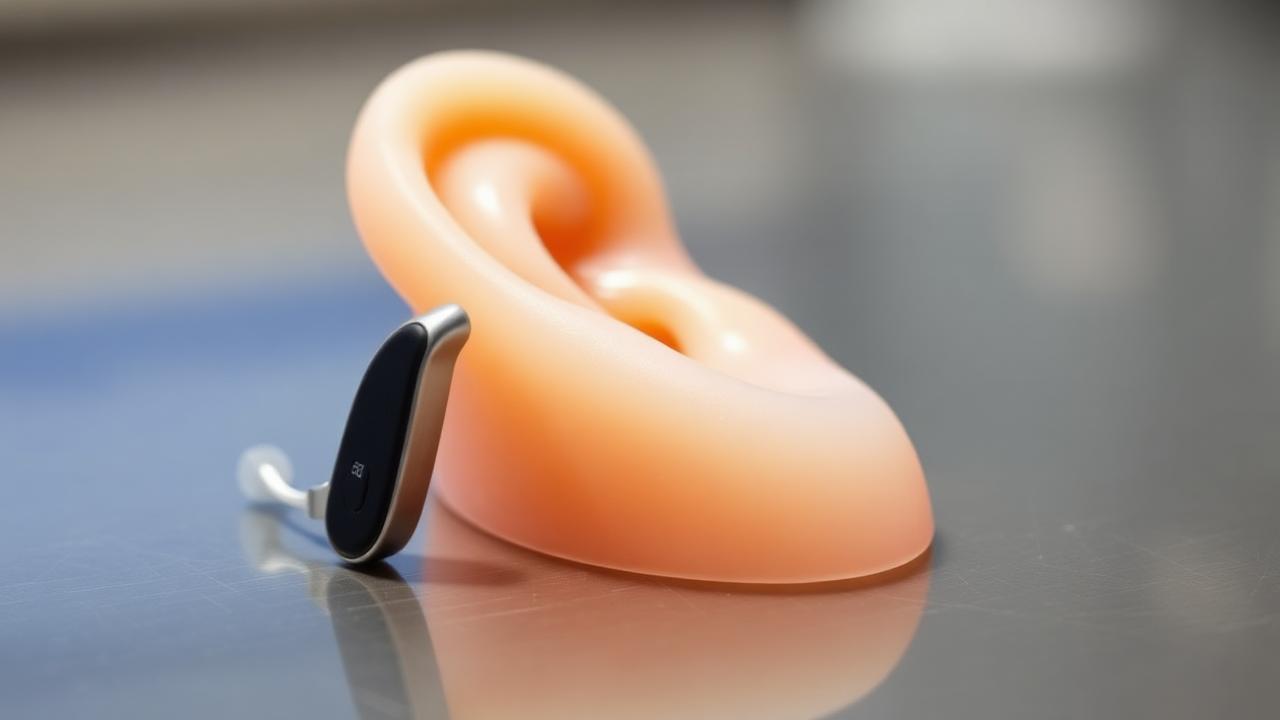
Behind-the-ear (BTE)
The classic design: the whole device sits behind the ear and sound travels down a tube into a custom mould or dome. BTE aids are the most powerful and the most durable, and they are the standard choice for severe or profound hearing loss. Because the electronics sit outside the canal, they cope best with wax and moisture and are the easiest to handle. They are also the most visible, though modern versions are far slimmer than the beige devices people picture.
Receiver-in-canal (RIC)
The most commonly fitted style in the UK. A small body sits behind the ear and a thin wire carries the receiver directly into the canal. Because the loudspeaker sits close to the eardrum, sound is clean and natural, and because the canal is usually left partly open, your own voice sounds less boomy. RIC devices support the full range of streaming features and are available across every technology level. Their weakness is that the receiver lives in the canal, so wax filters and occasional receiver replacement are part of ownership.
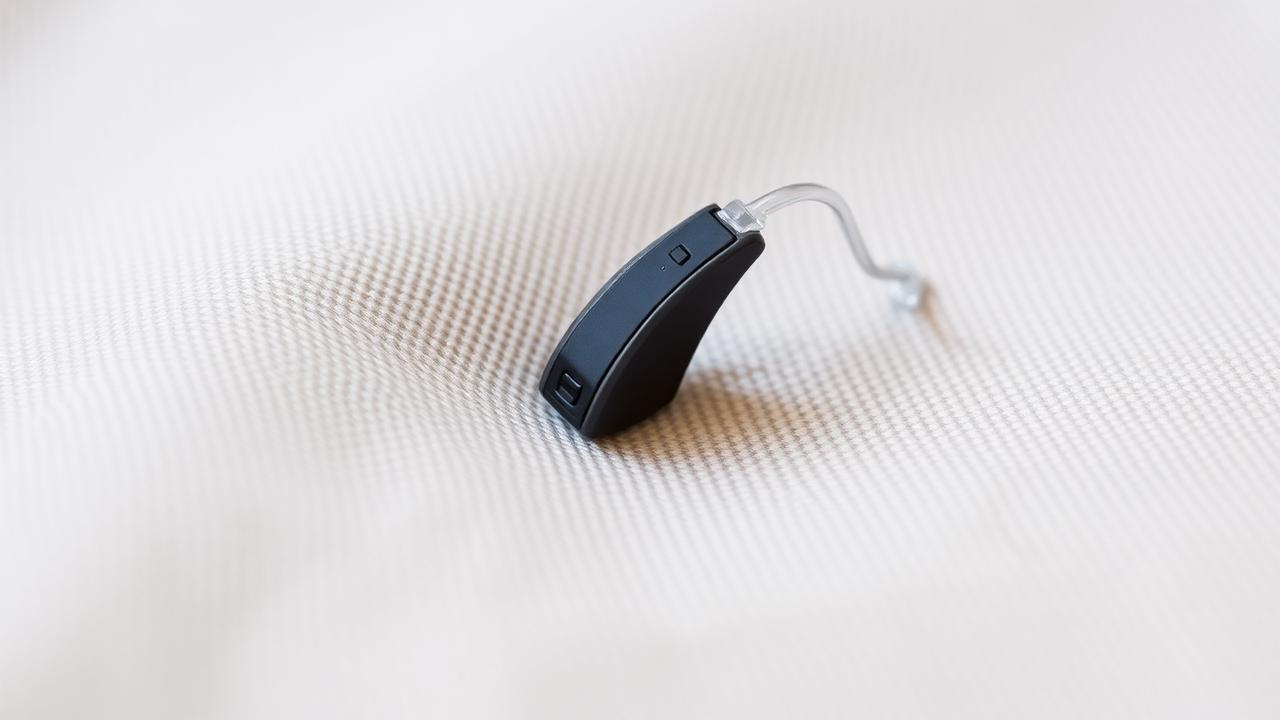
In-the-ear and in-the-canal (ITE and ITC)
Both are custom-moulded from an impression of your ear. ITE devices fill the bowl of the ear and can accommodate larger batteries, directional microphones and rechargeable cells. ITC devices sit further in and are correspondingly smaller and less capable. Custom devices suit people who wear glasses or masks constantly, or who dislike anything sitting behind the ear. They do collect more wax than behind-the-ear styles, so a good cleaning routine matters more.
Completely-in-canal (CIC)
The most discreet option, sitting deep enough to be almost invisible. That discretion is bought with real compromises: the smallest batteries, limited or no Bluetooth on many models, limited amplification, and small components that need good dexterity and eyesight to handle. CIC devices work well for a mild to moderate loss in someone who genuinely prioritises invisibility, and less well for anyone with a significant high-frequency loss.
Discretion is a legitimate priority — but a nearly invisible device you struggle to hear with is a worse outcome than a slightly visible one that works.
What actually decides the choice
- Degree and shape of hearing loss. A steep high-frequency loss needs more gain than the smallest devices can deliver without feedback.
- Ear canal size and shape. Some canals are simply too narrow or too curved for a deep-fitting device.
- Dexterity and eyesight. Smaller devices are harder to insert, clean and manage.
- Wax production. Heavy wax producers do better with electronics kept out of the canal.
- Connectivity needs. If phone and TV streaming matters to you, that rules out some of the smallest models.
- Lifestyle. Sport, sweat, hats, glasses and helmets all influence what stays put and stays dry.
Rechargeable or disposable batteries?
Most current RIC and BTE devices are rechargeable, and for the majority of people that is the better choice — no tiny cells to handle, no doors to open, and nothing to swallow. Disposable batteries still make sense for very heavy users who cannot reliably charge overnight, and for the smallest custom styles where a rechargeable cell will not fit. Our guide to hearing aid battery life covers the numbers for each size.
Trying before deciding
Style is easier to judge in your ears than on a page. We demonstrate the realistic options at your appointment, verify the fitting with real ear measurement, and back every purchase with a sixty-day money-back guarantee — so if the style you chose does not suit your life, you are not stuck with it. You can also compare hearing aid models across the four brands we fit before you come in.
Frequently asked questions
Clinical References & Sources
- RNID. Types of hearing aid. rnid.org.uk
- NHS (2023). Hearing aids and implants. nhs.uk
- NICE (2018). Hearing loss in adults: assessment and management. NG98. nice.org.uk
Reviewed 27 July 2026. Next scheduled review: September 2026.