
Quick answer
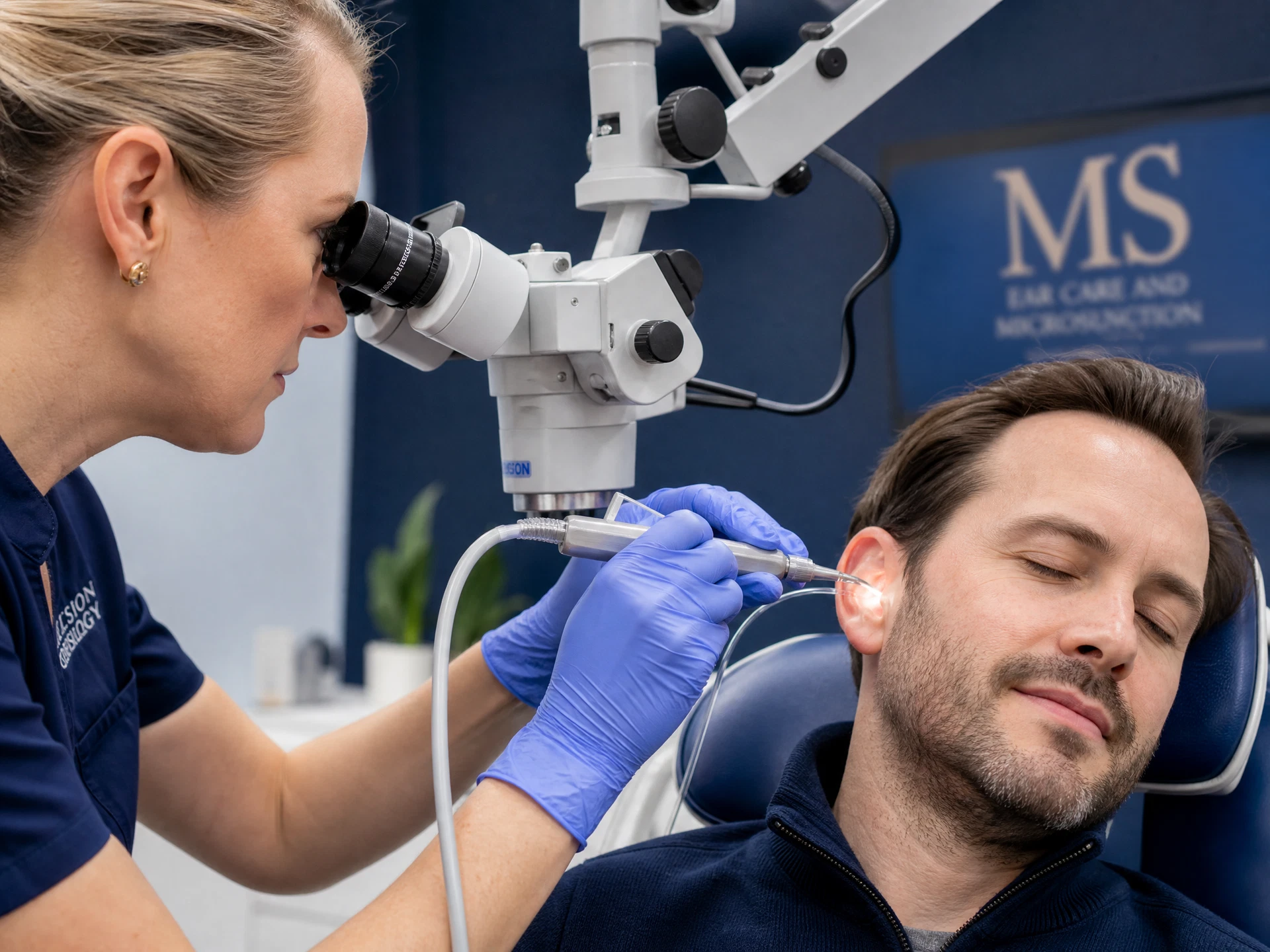
Microsuction removes ear wax with gentle suction under magnification, without putting any water into the ear. It takes 15 to 30 minutes, costs a fixed £65 at our Aylesbury clinic, and is the method ENT departments use because it is safe even when the eardrum is perforated.
The Equipment We Use
Microsuction depends on three things working together: magnification, illumination and controlled suction. We use ENT-grade binocular head loupes with a coaxial light source, a medical suction unit set to a low, fixed pressure, and single-use sterile probes in several gauges so the audiologist can match the probe to the canal and to the consistency of the wax.
Because the audiologist sees the canal directly at all times, wax is removed from the outside in. Nothing is inserted blind, which is the essential difference between this and any home method or cotton bud.
What Happens Step by Step
- 1
Ear History
We check for perforations, grommets, previous surgery, dizziness and any current infection before touching the ear.
- 2
Magnified Examination
ENT-grade head loupes and a bright light source give a direct, magnified view of the canal and eardrum.
- 3
Low-Pressure Suction
A fine sterile probe lifts the wax out in stages. Nothing is pushed inwards and no water is used.
- 4
Instrumentation If Needed
Very hard or adherent wax may be lifted with a Jobson Horne probe or crocodile forceps under direct vision.
- 5
Eardrum Check
Both eardrums are inspected once clear, so any underlying problem is picked up rather than missed behind wax.
- 6
Aftercare Plan
Written advice on drop use, swimming, hearing aid hygiene and when to come back.
Who Microsuction Is Especially Suited To
Any adult with a wax blockage can have microsuction, but it is the only sensible option for some groups. Irrigation forces water against the eardrum, so it is ruled out where the drum is not intact or where infection could be driven into the middle ear.
| Situation | Microsuction | Irrigation |
|---|---|---|
| Perforated eardrum | Suitable | Not suitable |
| Grommets fitted | Suitable | Not suitable |
| Previous mastoid or ear surgery | Suitable | Not suitable |
| Recent or recurrent ear infection | Usually suitable | Not suitable |
| Only hearing ear | Suitable | Avoided |
| Hearing aid wearer | Suitable, wax checked at same visit | Possible |
| Very hard, dry wax | Suitable, may need drops first | Often ineffective |
Assessment is made at the appointment. If microsuction is not appropriate on the day, you pay the £40 ear health consultation fee only.
Risks and How We Reduce Them
Microsuction is very safe, but no ear procedure is risk-free. The recognised risks are temporary dizziness from cool air in the canal, brief discomfort, a transient increase in tinnitus from the suction noise, and rarely a small graze of the canal skin. Working under direct vision, using low suction pressure and pausing on request keep these uncommon and short-lived.
We will not proceed if there is an active infection, severe pain or a foreign body that needs an ENT referral. In those cases you receive a written summary for your GP and no procedure fee is charged.
Microsuction FAQs
Clinical References & Sources
- NICE (2020). Earwax: clinical knowledge summary. cks.nice.org.uk
- NHS (2023). Earwax build-up. nhs.uk
- HCPC. Check the register of hearing aid dispensers. hcpc-uk.org
- BSHAA. Professional guidance for hearing care. bshaa.com
Reviewed 27 July 2026. Next scheduled review: September 2026.